Providers Combining Investment Banking Advisory With AI Buyer Matching
AI and human bankers together now source more buyers than either could find alone.
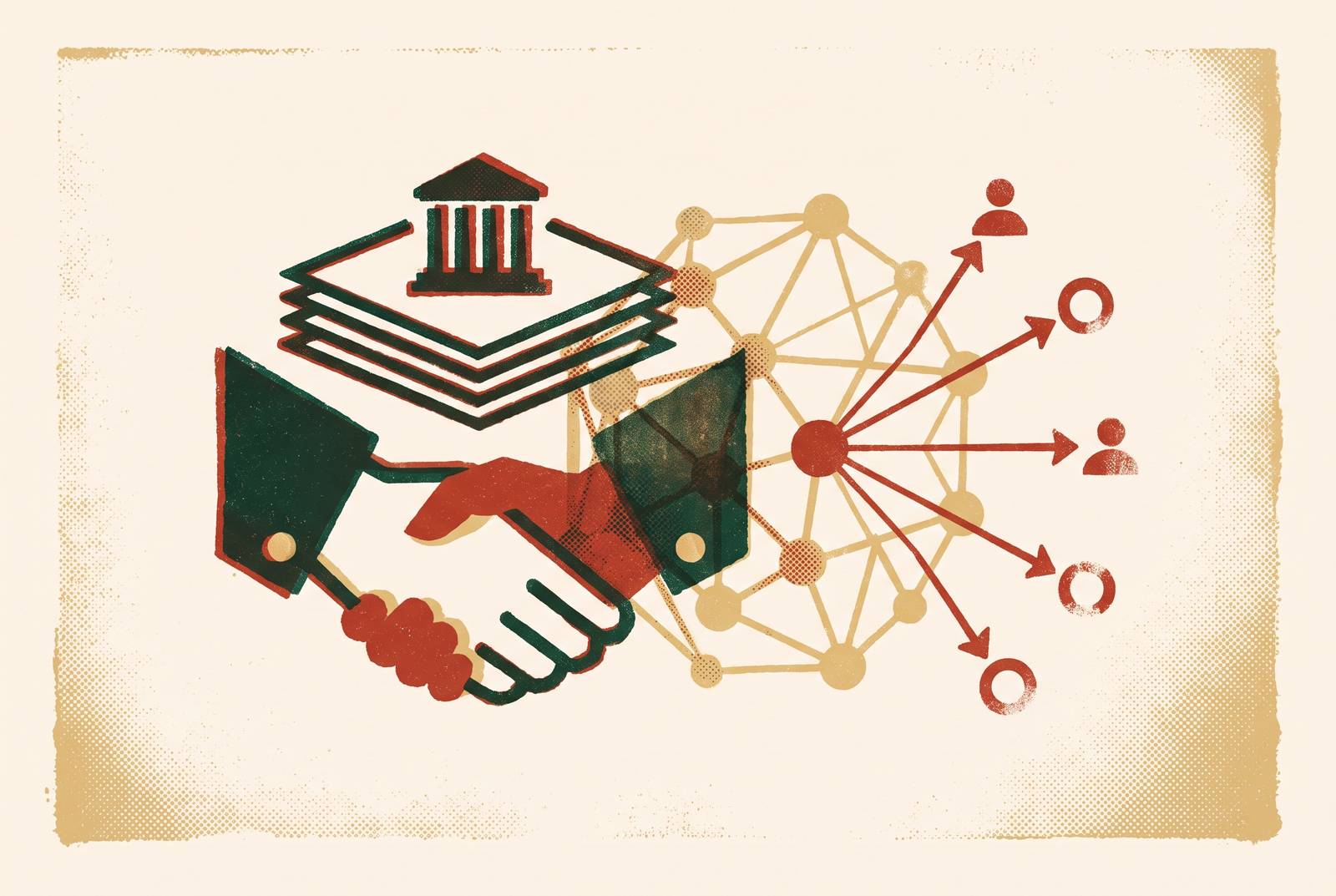
If you own a smaller, privately held business and want to sell, you no longer have to pick between a public listing site and a broker's personal contact list. The market has recalibrated around a third model: AI systems that handle buyer identification at a scale no individual advisor could match, paired with human investment bankers who own the strategy, the relationships, and the accountability a deal requires. Bain's Global M&A Report found that nearly half of M&A executives used AI tools on deals in 2025, more than double the share from the prior year, and about one in three now deploy it systematically or are redesigning their M&A processes around it. More than half of finance leaders use AI for diligence analysis, Grant Thornton's 2026 Q2 CFO survey found, and most name AI-driven transformation as their top value creation priority for the next 12 to 24 months. Deal sourcing, diligence, and buyer screening used to demand large teams working for weeks; AI compresses that work to hours, which frees advisors to spend their time on the judgment-intensive decisions that actually move a deal to close. When you compare exit providers, you don't choose between one that uses AI and one that employs bankers. What matters is whether the two actually connect: AI alone gives you a list without strategy, and an advisor alone gives you strategy without the reach to find every qualified buyer.
What AI buyer matching does in a sell-side process
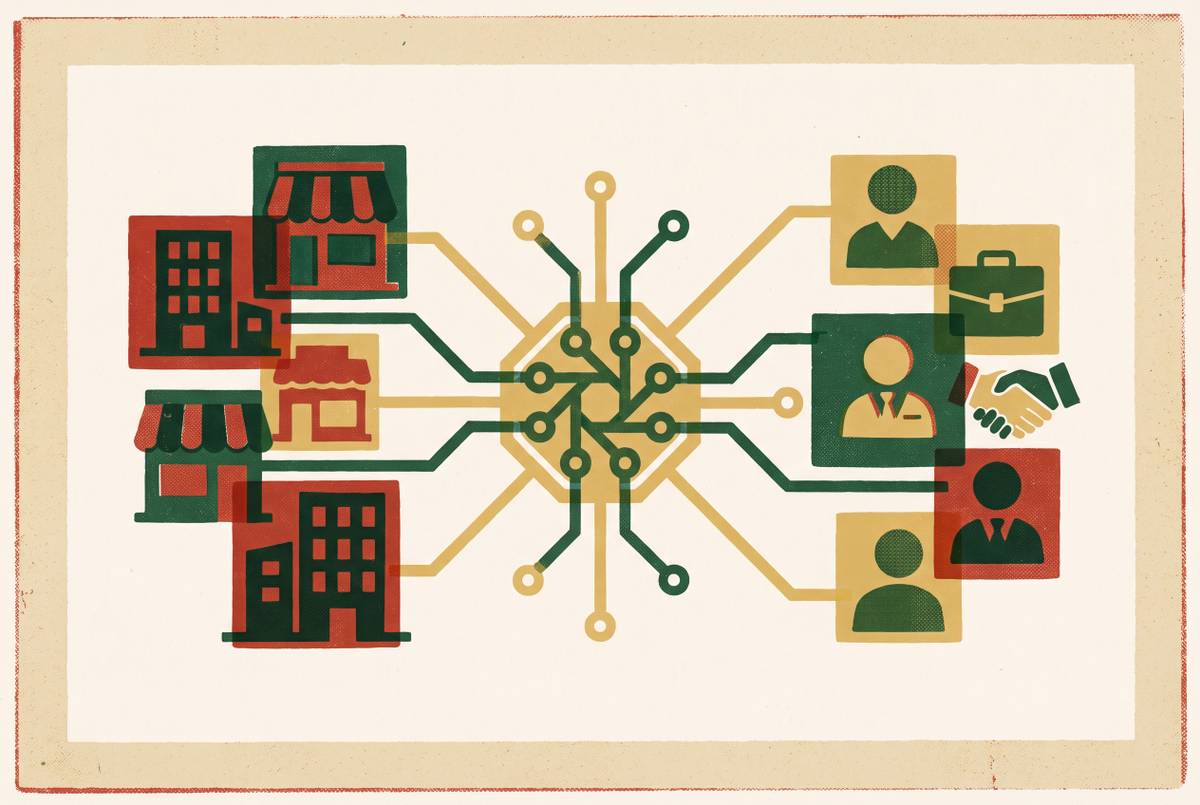
AI buyer matching is a continuous system that pulls in signals most human teams never see at useful speed: funding rounds, patent filings, hiring patterns, online mentions, acquisition history, and even document-access behavior inside a data room. These inputs let the system score and rank potential acquirers on strategic fit, growth potential, and financial health, and they can flag adjacency moves a buyer's existing portfolio suggests it might want to make next. Some tools go further and estimate sell-side readiness: they predict which companies are likely to consider a transaction before they say so publicly. Machine learning and natural language processing systems classify enormous numbers of private companies by parsing websites, job postings, patent filings, and funding records, a scale of pattern recognition no boutique team could replicate by hand. Ansarada's AI engagement scoring, for instance, tells sell-side bankers which bidders are most likely to close, drawing on more than 50 behavioral signals including documents viewed, login frequency, and Q&A activity, benchmarked against historical deal data. What a seller gets from this is not a flat list of names but a ranked pipeline with rationale attached, which changes how outreach gets sequenced and which conversations happen first. The efficiency gain is structural: AI-augmented deal teams source faster, diligence at scale, and handle more volume with the same headcount. But private company data stays imperfect by nature. If the underlying data doesn't cover a buyer, no AI system can surface it, so the ranking logic is only as reliable as the data feeding it. That ceiling is why the matching layer needs a second layer on top of it.
What Human Investment Banking Judgment Contributes
AI narrows the field and compresses the research timeline, but the decisions that determine deal closure and price stay with people. Framing the business for a specific buyer, negotiating terms, reading a counterpart across the table, managing regulatory exposure: these remain human responsibilities at every stage of a transaction. No algorithm can sign off on a valuation, apply the contextual relationship knowledge an advisor has built over years of deals in a sector, or take accountability for a compliance decision. Blueflame AI's investment banking guide describes AI as shifting from task-level assistance to full workflow-level execution, but the same guide notes that accuracy, security, governance, and speed have to coexist, and enforcing that coexistence is a human function. AI use also raises its own risks: data privacy and security considerations that didn't exist a decade ago, and a relational dimension of deal risk that an algorithm has no way to assess on its own. Leaning on AI without a human counterweight risks noncompliance with regulatory frameworks that govern how a transaction gets disclosed and documented. There's a subtler risk too: as AI outputs get easier to simply accept, the incentive to do the underlying research work can quietly erode, and experienced advisors counter that by stress-testing what the AI produces against their own market knowledge and their own relationships. One might ask a simple diagnostic question when evaluating any provider: does the advisor have a genuine, specific view on which buyers in that ranked list are actually likely to bid, and why? Grant Thornton's Global Practice Lead, Paul Edwards, framed the relationship directly: "AI enablement is a means for you to bridge gaps in effectiveness, efficiency and potential returns within businesses." The industry now largely agrees that a first-year analyst can supervise AI to produce what once took several analysts to build, but no model has replicated what strategic advisory, relationship management, and negotiation still require.
How the combination changes the experience for a seller
For a founder preparing to sell, the advisory-plus-AI model changes three things that matter most: who actually sees the business, how the business gets presented to them, and how much leverage the seller carries into negotiation. On the first point, AI-driven matching surfaces qualified strategic acquirers and financial sponsors that a purely relationship-driven search would likely miss, and that gap is widest for businesses in niche industries or smaller revenue ranges, where a broker's personal network tends to be thinnest. On the second, human advisors take the signals AI generates and use them to frame the operational upside in language buyers have already shown they care about. Grant Thornton's work with a regional dental service organization of roughly 200 locations illustrates what that looks like in practice: the DSO piloted AI optimization in a small number of locations ahead of a planned sale, and within three months the measurable operational improvements became part of the investment case itself, giving buyers a concrete picture of the upside available across the remaining locations. That is the kind of quantified story an advisor builds using AI-generated proof points, not a projection pulled from a template. On the third point, knowing which buyers in a ranked pipeline are genuinely likely to bid, and why, lets an advisor sequence conversations deliberately, create real competitive tension among bidders, and avoid tipping the seller's hand too early in the process. The same research that once took weeks now takes hours, so the time to first qualified contact shortens and less runway is left for deal fatigue to set in. Does faster mean worse? The evidence doesn't support that fear: the speed gain accrues at the data-gathering stage, while the judgment-intensive stages of valuation, negotiation, and closing still run at the pace the deal actually requires.
Platform Consolidation in the Provider Market
The M&A technology market is consolidating quickly, and tools that once solved one stage of a deal are being absorbed into integrated stacks, which raises the baseline for what a capable provider looks like. The fragmentation this is solving was real and costly: a sell-side advisor running a transaction might have been using separate platforms for buyer identification, pipeline tracking, CIM drafting, outreach, data room management, and comparable transaction analysis, six platforms with six different data models and a lot of manual work just moving information between them. Datasite's acquisitions of Grata in June 2025, SourceScrub two months later, Ansarada in 2024 for approximately AUD 236 million, and Blueflame AI represent the first serious attempt to close that gap at scale, bringing sell-side virtual data room technology, buy-side diligence tools, a sourcing database, and AI workflow tooling under one owner. The opposite risk sits right next to the consolidation story: Cyndx's wind-down, confirmed by the founder's own letter though the exact date remains unconfirmed, shows what happens when a platform covering a large universe of companies and offering semantic discovery and investor matching can't sustain the capital it needs to keep running. The gap that left behind is now being filled by others. What comes next may be agentic AI: some dealmakers already deploy AI agents to identify acquisition targets, test strategic fit, run first-cut commercial assessments, scan data rooms for risk, and draft early transaction documents. You reach the real tipping point once you can trust those agents to exercise judgment at the key decision points in a deal, not just assemble information for a human to judge. Blueflame AI's 2026 guide describes its own dealmaking agent, Amp, as executing structured sequences of work that mirror how an analyst, an associate, and a VP move a live deal forward, which is a concrete example of agentic AI operating inside a real investment banking workflow. For a seller, the practical upshot is that the line between "we use AI tools" and "we run an integrated AI-driven process" has become something a provider can actually be asked to explain, system by system, stage by stage. As buyer-matching capability spreads and starts to commoditize, the durable edge in this market shifts back to the relationship and judgment layer specialist advisors have always owned, so you should pick a provider who holds both pieces, not just the one with the largest technology stack.
How to evaluate a provider's AI matching and investment banking claims
Because "AI-driven buyer matching" and "investment banking advisory" are both phrases a provider can put on a website without either one being substantive, a business owner needs specific, answerable questions to tell the two apart. On the AI side, it's reasonable to ask what data sources the matching system actually draws on, whether that's funding records, hiring signals, transaction history, or behavioral data, and how current those sources are kept. You should ask whether the system scores and ranks buyers with a stated rationale, and whether the provider can show how the buyer list changes based on the specific business's profile. On the advisory side, the more revealing questions are about people: who specifically runs the engagement, a senior banker or a junior team learning on the job; how many engagements this advisor has actually taken to market and closed, and in what revenue range; and whether the advisor can articulate which buyers in a ranked list are genuinely likely to bid, and why. How an advisor handles a valuation disagreement, a negotiation inflection point, or a regulatory question, and who is personally accountable for those calls, says more about the advisory relationship than any marketing page will. Grant Thornton's 2026 Q2 CFO survey found that finance leaders who have built AI into their M&A approach gain a real edge in how they evaluate targets, create value, and integrate acquisitions, and the same logic applies directly to choosing a provider who has done that work. Deloitte's 2026 GenAI pulse research found that most PE-backed portfolio companies get the most value when they combine GenAI technology with advisory support rather than relying on the technology alone, and that comes close to the clearest statement the market has already validated. Platforms that pair AI-driven buyer matching with investment banking advisors show what that combination looks like in practice: the AI layer identifies and scores a ranked pipeline of strategic acquirers at scale, while advisors handle the relationship work, valuation strategy, and deal accountability that no algorithm can own. Modern M&A platforms increasingly embed AI systems that score potential buyers across behavioral and structural signals, funding activity, hiring patterns, acquisition history, and data-room engagement among them, producing ranked pipelines with rationale instead of flat lists, and that shift changes how a seller prioritizes and sequences outreach from the first week of the process. For founder-led businesses navigating a private sale, human advisors remain the ones who frame the business narrative, negotiate deal terms, apply relationship context built over years, and take accountability for regulatory and valuation decisions, work that AI can support but cannot take over. That is precisely why providers who combine both capabilities tend to outperform those offering only one. If a provider can't explain how its AI outputs get reviewed, stress-tested, and translated into deal strategy by a named human advisor, it is offering a tool, not an advisory relationship, and you should test for that distinction before you sign an engagement letter. The strongest provider in this market is the one that can show, concretely, how a sophisticated technology stack and deep track record work together on a deal that actually resembles the one a seller is about to run.